The 60-second snapshot
Copenhagen is small. You can cycle from one side to the other in 35 minutes. That's the most important thing to understand before you arrive: this is a city you'll see by walking and pedalling, not by metro stops. Most of what you'll want to do happens between Christianshavn in the east and Frederiksberg in the west — a distance you could clearly cover on foot in an unhurried hour.
Skip the tourist bus. Skip Strøget after lunchtime. Spend an evening in a neighbourhood that isn't Indre By. Swim in the harbour at least once if it's summer. That's roughly the brief.
The single best thing you can do for your trip costs nothing: rent a bike. Donkey Republic drop-off bikes are everywhere, the cycle lanes are separated from cars, and the city is genuinely flat. We've never met a visitor who regretted cycling. We've met plenty who regretted the hop-on-hop-off bus.
Where to stay (by neighbourhood)
"Central" doesn't mean much in Copenhagen — everything is central. Pick by mood instead:
Indre By (city centre) — for first-timers
The medieval heart. Cobblestones, Nyhavn, Strøget, the royal palace, Tivoli. Walk-everywhere convenient. Slightly touristy by day, quieter than you'd expect at night. Best for a first visit or a short stay.
Stays we'd consider: Hotel Sanders (small, warm, walk to Nyhavn in 90 seconds), Hotel d'Angleterre (the splurge), Generator Copenhagen (budget, design-forward hostel-hotel).
Vesterbro — for food and nightlife
Ten years ago this was the rough side. Now it's the most exciting food neighbourhood in the city — Kødbyen (the old meatpacking district) is full of restaurants and natural-wine bars. Walkable to the centre in 15 minutes.
Stays we'd consider: Andersen Boutique Hotel, Hotel Ottilia, Urban House.
Nørrebro — for the locals' city
Multicultural, creative, slightly grungy. Jægersborggade is one of the best streets in Copenhagen for independent shops and cafés. The Assistens Cemetery (where Kierkegaard and H.C. Andersen are buried) is a green sanctuary.
Østerbro — for couples and families
Quiet, residential, leafy. Fælledparken (the city's biggest park) and beautiful blocks of historic apartments. A 15-minute cycle from everything. Our pick if you want to feel like you live here.
Christianshavn — for waterfront and Christiania
A small island a five-minute walk from Indre By. Canals, houseboats, and the unofficial commune of Christiania next door. Sleepier and beautifully strange.
When filtering on Booking.com, sort by review score over 8.5 and tick free cancellation. Copenhagen hotels are expensive enough that flexibility is worth more than a 10% prepay discount. Browse Copenhagen stays on Booking.com →
12 things worth doing
Ranked, roughly, by how much we'd insist on them.
1. Walk Nyhavn at golden hour (free)
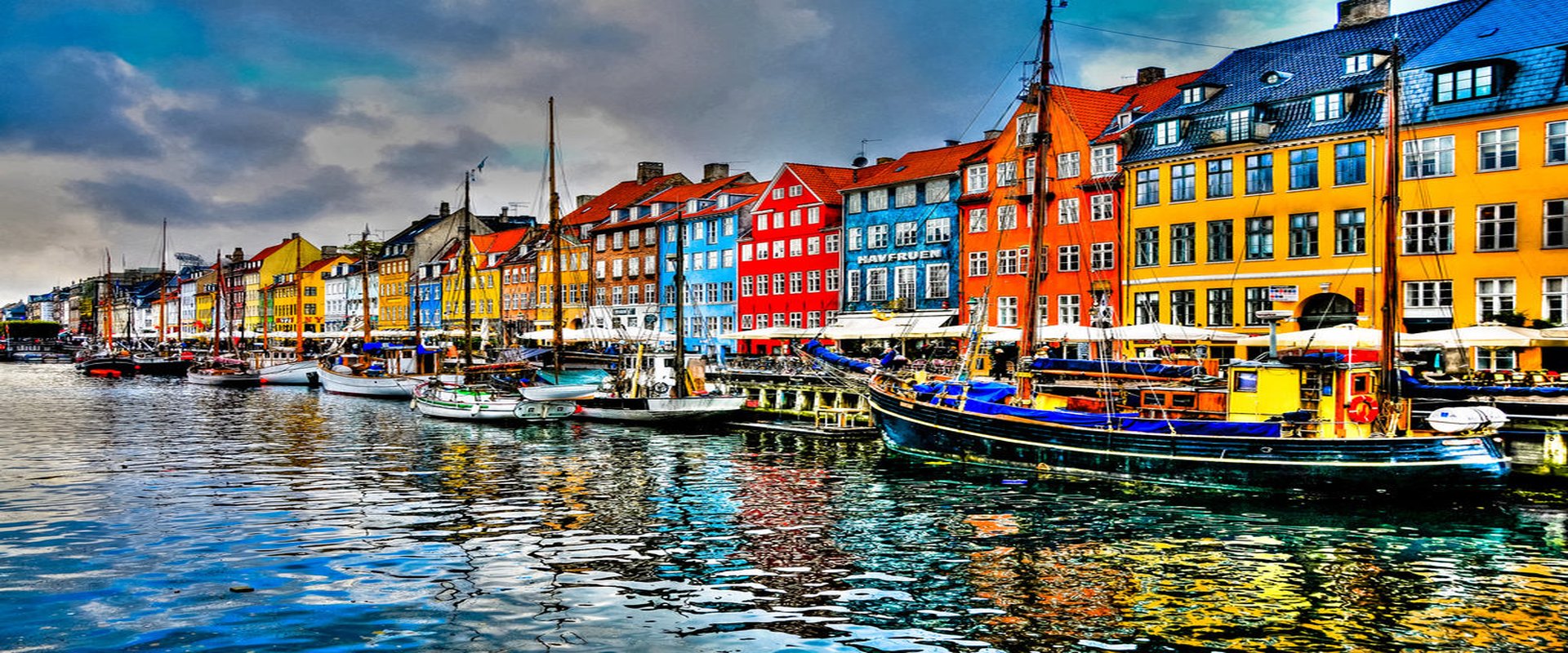
Yes, it's the photo. Yes, it's worth it — but at 8 PM in summer, not at noon. The light hits the coloured houses and the whole canal glows. Take the photo, then walk five minutes inland and find dinner somewhere quieter.
2. Tivoli Gardens (book ahead)
The world's second-oldest amusement park, but it's really a garden with rides. The most magical at dusk in summer or at Christmas. Cheaper if you skip the unlimited-ride wristband and just buy entry.
Skip-the-line Tivoli tickets →
3. Harbour swim at Islands Brygge or Sandkaj
The harbour water is clean. Swimming in it from one of the free public baths is, no exaggeration, one of the best things you can do in a European capital. Summer only (June–September); bring a towel. Sandkaj has a quieter, more design-y vibe; Islands Brygge is the classic.
4. Rosenborg Castle and the Crown Jewels
Small, intense, fairy-tale. The basement holds the actual royal crown jewels. 90 minutes is enough. Combine with a walk through the King's Garden next door.
5. Cycle the harbour loop
From Inderhavnsbroen across to Refshaleøen (where the food halls are), then back via Christianshavn. About 8 km, all flat, all beautiful, all on protected paths.
6. Reffen / Refshaleøen for street food
The old shipyard turned street-food village. Outdoor, harbourside, informal, summer-perfect. We come for the New Nordic small plates and the unreasonable view back at the city.
7. Day trip to Helsingør for Kronborg Castle
45 minutes by train. Kronborg is Hamlet's castle (or close enough for the play to claim it). The Maritime Museum next door is a quiet architectural marvel underground.
8. The Round Tower
17th-century spiral ramp instead of stairs (legend says a Tsar rode his horse to the top). The view across the old town rooftops is the most underrated view in the city.
9. The Botanical Garden and Glass Houses
Free, central, and beautiful all year. The Palm House is the warm, humid escape on a grey Copenhagen day. Adjacent to the Geological and Zoological museums if you have curious kids.
10. Designmuseum Danmark
If you've ever loved a Danish chair, a desk lamp, or a piece of Royal Copenhagen porcelain — this is the building that explains why. Reopened in 2022 after a brilliant renovation.
11. The Cisterns (Cisternerne)
A former underground water reservoir under Frederiksberg Hill, now an art space. Stalactites, reflecting pools, rotating installations. Unworldly. Bring a jacket — it's cold.
12. Late Saturday at a bakery on Jægersborggade
Mirabelle for cardamom buns, Andersen & Maillard for coffee and croissants. Walk the street slowly. This is what Copenhagen feels like when it's being itself.
Get a Copenhagen Card. It covers Tivoli, Rosenborg, Christiansborg, the Round Tower, Designmuseum, harbour buses, and all public transport. The 48-hour version usually pays for itself by your fourth attraction. Compare Copenhagen Card options
What to skip (gently)
Nobody writes this part of a guide. Here's the clear version.
- The Little Mermaid. She's small. She's in a tourist queue. Walk through Kastellet (the star-shaped fortress behind her) instead — that's the better experience.
- Hop-on-hop-off buses. Copenhagen is the world's most cyclable capital. The bus puts you in traffic, looking down at people having more fun on bikes.
- Strøget after midday. The famous pedestrian shopping street becomes a slow river of tourists and chain stores by 1 PM. Walk it once at 9 AM if you must; otherwise, parallel streets (Pilestræde, Kronprinsensgade) are infinitely better.
- Eating dinner near Nyhavn. The view is great. The food in that exact block is, with a couple of exceptions, expensive and average. Walk 4 minutes inland.
Where to eat (no Michelin pressure)
Smørrebrød done right
Schønnemann for the old-school cellar experience and the best herring you'll have in your life. Selma for the modern, polished version. Both lunch only. Both worth booking 1–2 weeks ahead.
The casual spots locals actually go to
Restaurant Schiller's on Skydebanegade for clear Danish food without a tasting menu. Manfreds for natural wine and brilliant small plates in Nørrebro. Hija de Sanchez for tacos by a former Noma pastry chef.
The splurge (book months ahead)
Noma if you can. Geranium for three Michelin stars done playful. Alchemist for theatre-and-food. Jordnær for the quieter, perfect-technique alternative.
The bakery rule
Hart Bageri, Juno the Bakery, Andersen & Maillard, Lille Bakery (on Refshaleøen). Cardamom buns at any of these will fix most things.
Getting around
From the airport. The metro runs every 4–6 minutes, 24 hours, takes 15 minutes to the city centre. Buy a ticket from the machine — about 36 DKK (~€5). Taxis are around €40–€55.
In the city. Cycle. We mean it. Donkey Republic is the easy option (app, scan, ride). Failing that: walk. Use the metro only for cross-city distances. The buses are good but you won't really need them.
Cycling rules. Stay in the bike lane. Use hand signals (hand up = stopping; arm out = turning). Don't ride two abreast in traffic. Bike thefts happen — always lock through the frame, not just the wheel.
Money & practicalities
- Currency: Danish Krone (DKK). Roughly 7.45 DKK = €1. You can use cards everywhere — Denmark is functionally cashless.
- Tipping: Not expected. Round up if service was great.
- Tap water: Drink it. It's excellent and free.
- SIM / data: EU roaming works as expected for EU phones. Otherwise grab a Lebara or 3DK prepaid SIM.
- Sockets: Type K (the Danish three-prong) — but type C/E plugs also fit. Standard European voltage.
- Tax-free shopping: Outside the EU? Save your receipts over 300 DKK and claim VAT back at the airport.
When to visit
Late May–early September is the sweet spot. Daylight stretches until 10 PM by midsummer, the harbour is warm enough to swim in, the city's terraces are full. Mid-July is peak tourism; we'd aim for late May/early June or late August/early September if we could.
December is genuinely magical. Tivoli at Christmas is a sight everyone should see once. Pack layers and a waterproof.
January–March is cold, dark, and quiet. The tradeoff is cheaper hotels and a city to yourself. Pack for it.
October–November can be beautiful (golden trees, crisp days) or brutal (wind and rain). Bring waterproof shoes.
Quick answers
How many days do you need in Copenhagen?
Three full days is the sweet spot. Day one for the city centre. Day two for a neighbourhood and a harbour bath. Day three for a day trip — Helsingør or Roskilde.
Is the Copenhagen Card worth it?
Yes, if you'll visit 3 or more paid attractions in a day. The 48-hour version typically pays for itself by attraction #4 and covers all public transport.
Can you swim in Copenhagen harbour?
Yes — the harbour has been clean enough to swim in since 2002. Free public baths at Islands Brygge, Sluseholmen, and Sandkaj. Open roughly June through September.
Is Copenhagen safe at night?
Yes. Copenhagen is consistently among the safest capitals globally. Standard urban awareness applies near the central train station late at night, but you can walk most of the city safely at any hour.


